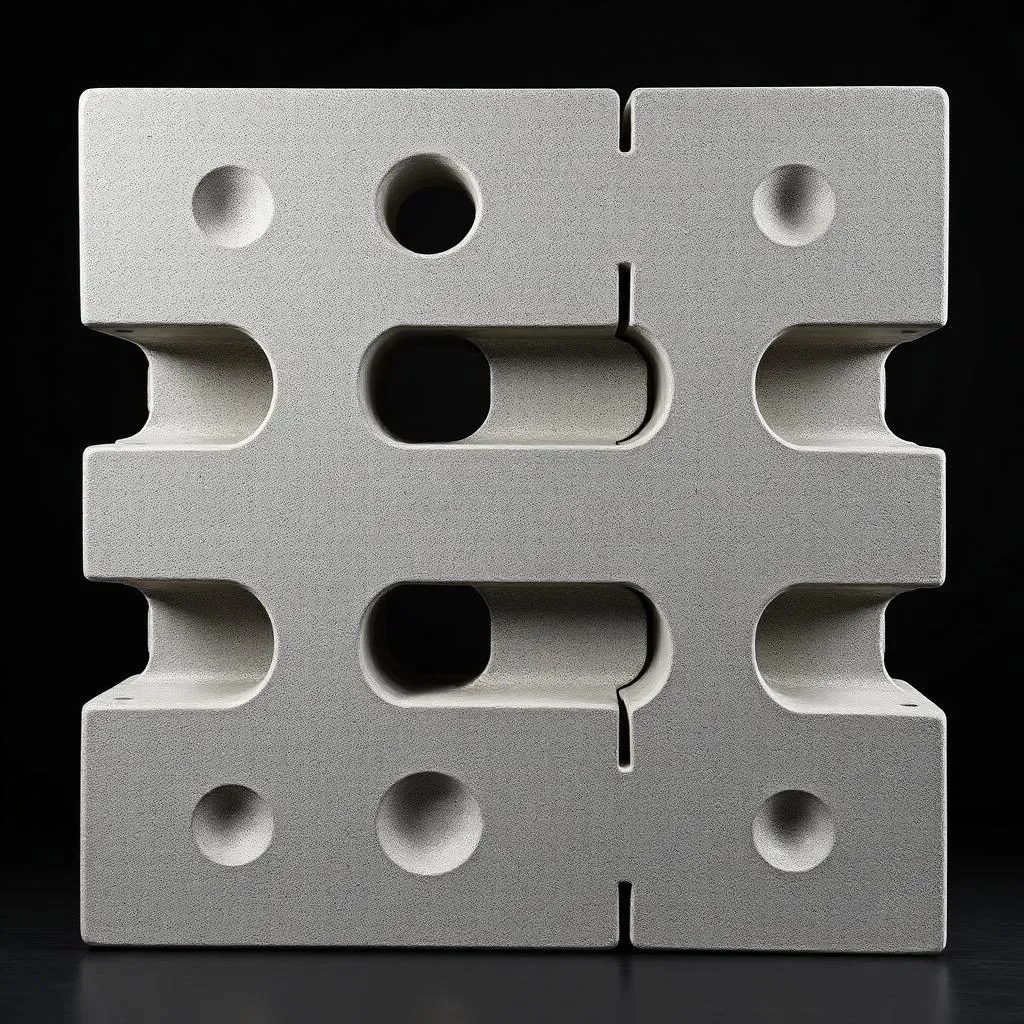
Large Concrete Blocks
Blocks from about 1,000 lb up, for commercial walls, embankments and storage bays. They can be lifted and moved again if the plan changes.
Service-Disabled Veteran-Owned · American-Made · Shipped Nationwide
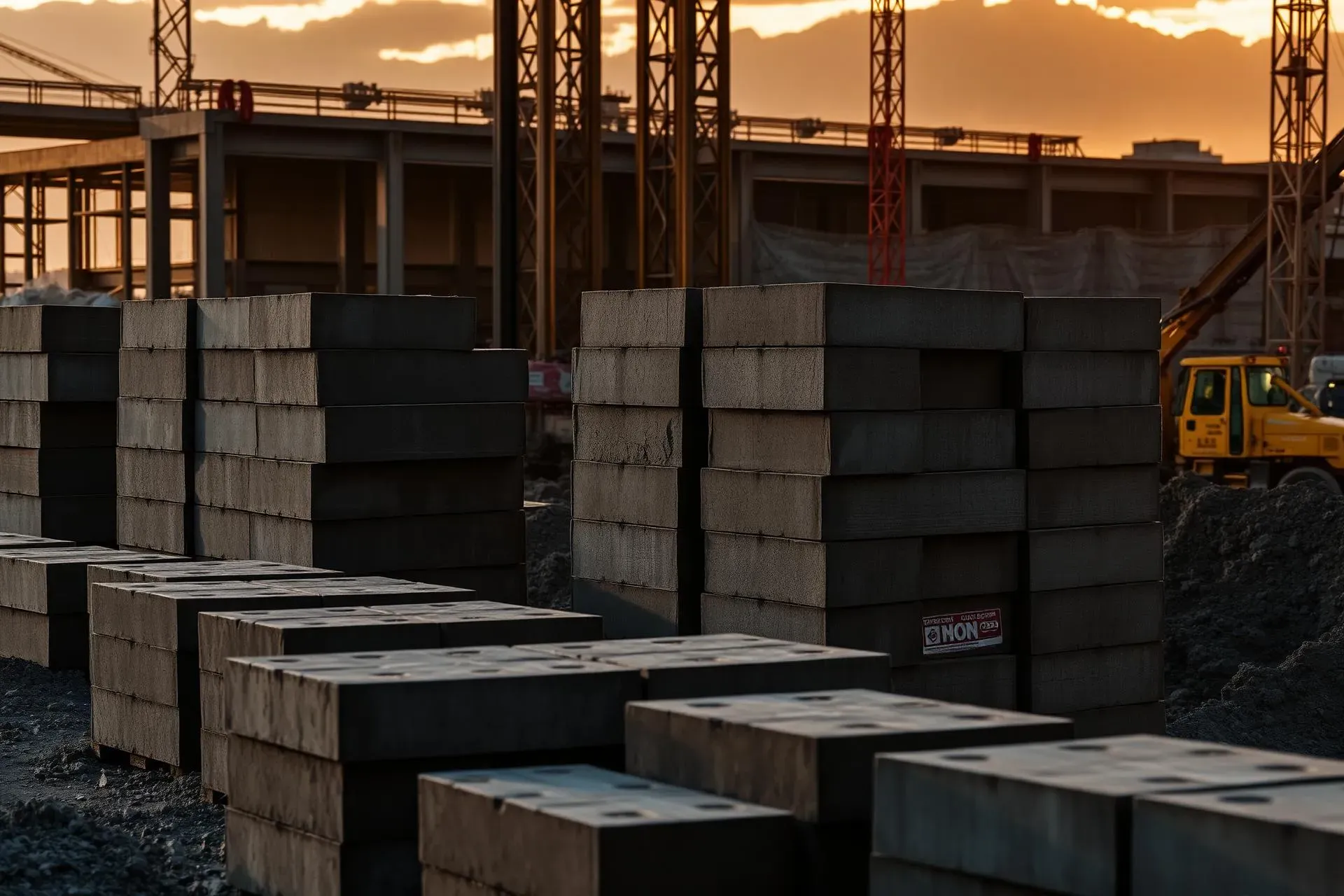
Our concrete retaining wall blocks are heavy, interlocking units for walls, storage bays and barriers. They stack without mortar, ship by the truckload to job sites across the U.S., and come from a team that answers its own phone.
Soil pushes on a wall every day. Rain adds weight behind it, and the ground moves as seasons change. A wall that leans or splits can take a slope, a driveway or a foundation with it, and the repair usually costs more than building it right the first time.
A retaining wall needs three things: enough mass to resist that push, a connection between units that keeps courses aligned, and concrete strong enough to last through freeze and thaw. Thin landscape units and glued-together systems are not made for that work. Our blocks are.
We do not sell garden edging. Every block we supply is made to carry load: slopes, grade changes, material bins and infrastructure walls. Pick the line that matches the job.
Blocks from about 1,000 lb up, for commercial walls, embankments and storage bays. They can be lifted and moved again if the plan changes.
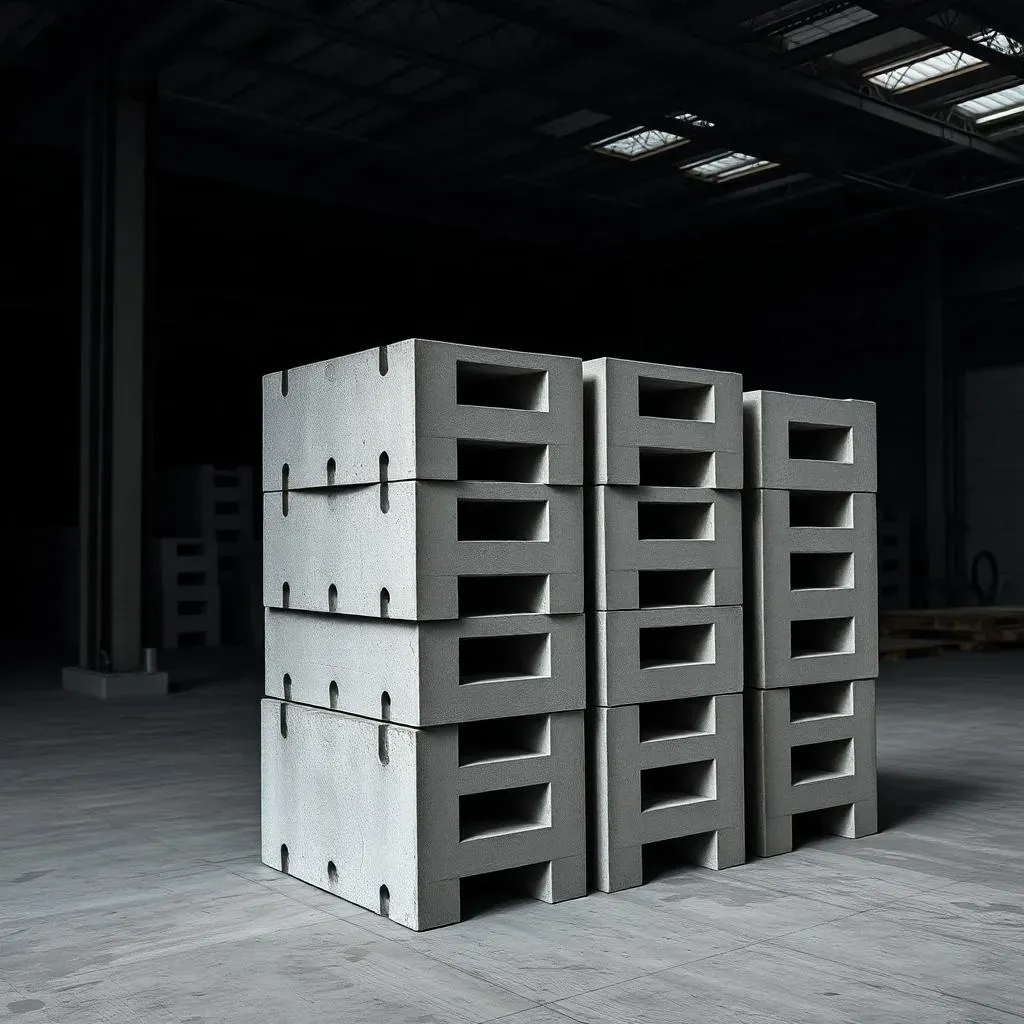
Precast to tight tolerances so each course sits level. Full, half and low-profile units for walls that need clean ends and caps.
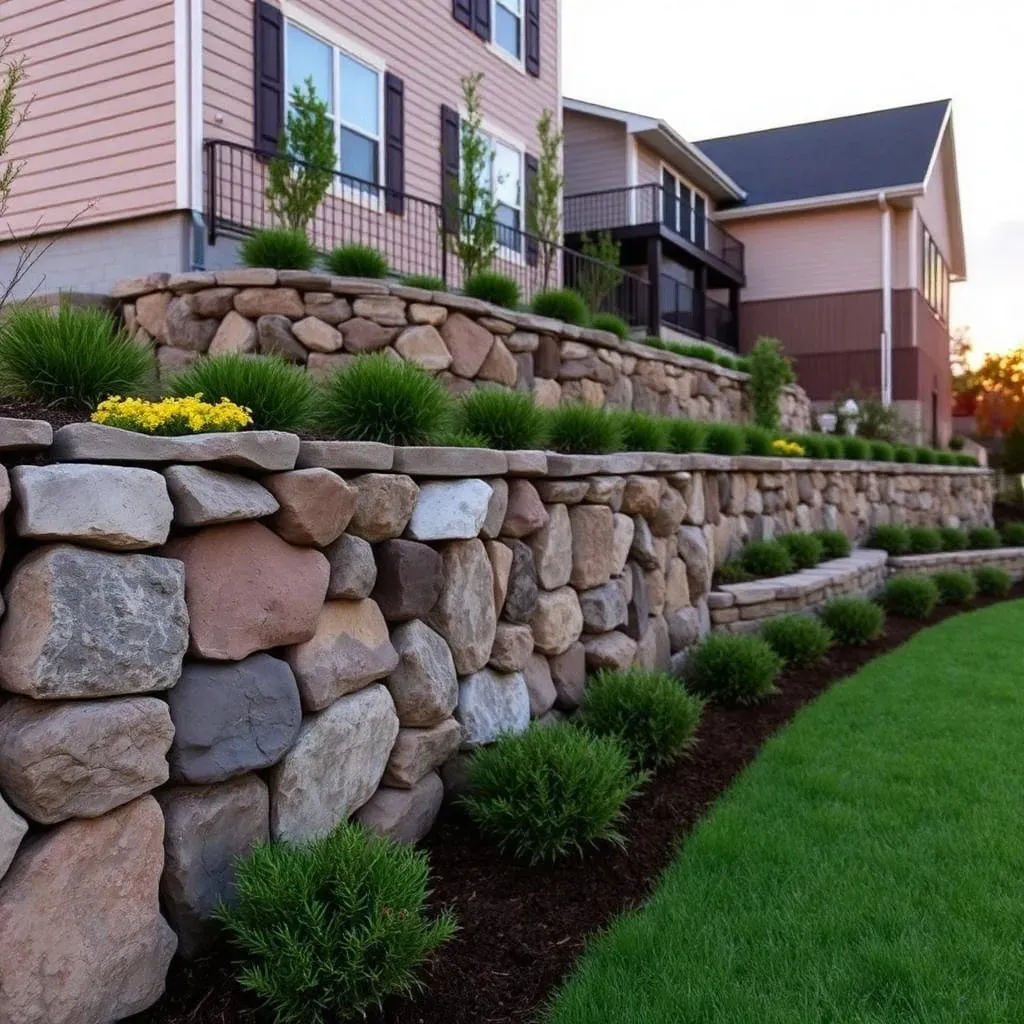
Smaller units in Rock Face, Brick Finish and Stacked Stone, for yard walls and terraces that people will look at every day.
Building a material bin or a site barrier? See concrete barrier and bin blocks. For heavy civil and flood work, see V-lock concrete blocks. To compare every size and weight in one table, open all products.
A wall has to keep working long after the crew leaves. These four traits are why ours do.
Each unit's weight and shape spread the load across the wall, so pressure does not build up at one weak point and push it out of line.
Raised keys and matching grooves align every course. Crews spend less time shimming and checking, and long runs stay straight.
Set on a good base with free-draining backfill, the wall lets water out instead of holding it, which keeps extra force off the face after every storm.
Dense, high-strength concrete stands up to heat, cold and moisture year after year without crumbling at the edges.

Labor is usually the biggest line on a wall budget. Interlocking blocks cut it down.
Poured walls and mortared brick mean forms, mixing, setting and curing time. Every one of those steps adds hours and pushes back the next trade.
Our blocks arrive ready to set. A machine places each unit, the keys line it up, and the next course goes on top. There is nothing to wait on.
01
No mortar, glue or curing time
02
Fewer steps per course
03
Smaller crews on site
04
Scales from one wall to a full site
Shorter install time means lower labor cost and a schedule that holds.
Because blocks show up ready to use, the wall goes up when the crew is ready, not when the materials are.
One block system covers residential slopes, commercial sites and farm yards. The size you choose depends on wall height and load.
Hold back a hillside, create flat ground for a pad or road, or step a site into terraces without constant repairs.
Parking lots, new developments and public works need walls that hold under steady load for years. These blocks are chosen where failure is not acceptable.
The same heavy units form bays and partitions for bulk materials, plus barriers around equipment.
Large homes and landscape projects get the same structure with a finished face.
Good blocks only help if they arrive on time. We plan supply with the same care as the product.
Contractors, developers and commercial buyers order by the truckload for one large job or a string of them, from one supplier instead of several.
Most delays come from late or partial loads, not from the install. We set delivery windows before the truck leaves so the crew is not waiting.
Phased builds get the same block on every load, from the first truck to the last, so the wall stays consistent.
Plenty of companies sell concrete blocks. Here is what you get when you call us.
01
Detachment 5 Block is a service-disabled veteran-owned business. We treat every order like a mission with a deadline.
02
Blocks are made to tight tolerances and strength-tested, so what you specify on the first order is what shows up on the tenth.
03
Call 844-BLOCKS-5 and you reach someone who knows the product and can quote it. No call center, no ticket number.
Four steps from first call to finished wall.
01
Share wall length and height, block type and delivery address. You get a price for what the job needs.
02
We confirm quantities, the number of loads and delivery dates before anything ships.
03
Trucks come in the agreed window. Have a forklift or other lifting equipment ready to unload.
04
Place the first course on a level base and stack. The interlock keeps each course aligned without mortar.
They hold back soil, handle changes in grade and create usable flat ground. Common jobs include slope stabilization, erosion control, terraced landscapes, commercial and infrastructure walls, plus bulk storage bays on farms and industrial yards.
Our large blocks are made from 2,500 to 4,000 PSI concrete depending on the mix, and our landscaping units are rated at 4,000+ PSI. Strength on paper matters, but so does the interlock, which spreads load across the whole wall.
No. The blocks interlock and are held in place by their own weight, so there is no mortar or adhesive. That saves labor and lets the wall flex slightly with ground movement instead of cracking.
Decades, when it sits on a well-prepared base with good drainage. The blocks themselves are made to resist weather, moisture and freeze-thaw cycles.
Blocks are larger structural units made to carry load. Bricks are smaller and mostly decorative, and they usually need mortar and more labor. For structural or large walls, blocks are faster and more reliable.
Yes. They are used on commercial, industrial and infrastructure walls. For DOT or other engineered walls, have the project engineer review the specs for your site before ordering.
Yes. We supply bulk and wholesale orders to contractors, developers and large projects, including multi-load orders for phased builds.
Yes. We coordinate delivery to job sites across the United States and match each order to the closest production facility to keep freight costs down.
Send the wall size, block type and delivery address, and we will reply with clear pricing.