Skip to content
Service-Disabled Veteran-Owned Small Business badgeDetachment 5 Block
Menu

Service-Disabled Veteran-Owned · Shipped Nationwide

Large Concrete Blocks for Sale, Delivered Across the U.S.

Large concrete blocks that stack and lock without mortar. Use them for walls, material bins and site barriers, with sizes from about 1,000 lb to 4,000 lb and delivery to job sites nationwide.

What You Get With a Large Concrete Block

Detachment 5 Block supplies large concrete blocks to contractors, municipalities and site managers across the country. Many crews call them mafia blocks or bin blocks. Each one is precast in a controlled setting and cured before it ships, so it can be set the day it arrives.

Think of them as a building kit at full scale. There is no cutting, no mortar and no waiting for concrete to cure on site. A machine sets each block, and the next one locks on top.

How the interlock works

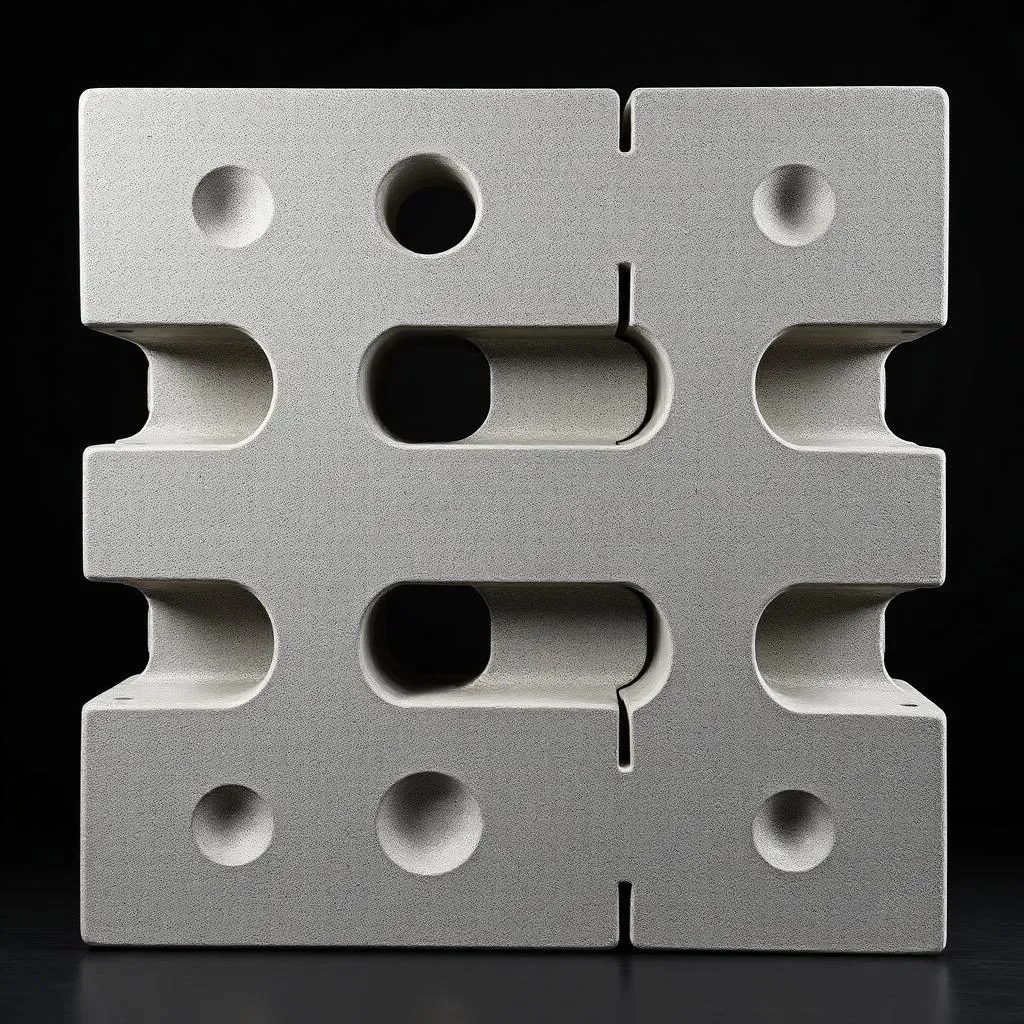
Each block is cast with raised knobs on top and matching recesses underneath. When a block is lowered onto the course below, the two fit together and the unit's weight holds it there.

  • No mortar or adhesive
  • Courses align themselves
  • Pressure spreads across the whole wall

Where crews put them

Large blocks earn their keep where something has to stay put.

  • Freestanding walls that hold back soil, often with no poured footing
  • Bays for sand, gravel, salt and other bulk material
  • Barriers along roads, job sites and property lines

How Large Blocks Perform Once They Are in the Ground

Strength ratings matter, but what counts is whether the wall moves. Here is what happens after installation.

They resist pressure

Soil and water push on a wall around the clock. Mass and full-face contact spread that force out, and the interlock stops courses from creeping or leaning.

They handle freeze and thaw

Water that gets into weak concrete freezes and cracks it. Dense, well-cured blocks limit that damage, so the wall holds shape winter after winter.

They need almost no upkeep

Rain, sun and snow do not wear these blocks down in a year or two. Once set, they keep doing their job with close to zero maintenance.

Common Uses for Large Concrete Blocks

People buy these blocks because something on site has to stay where it is.

Walls that hold back soil

Use them where poured concrete would take too long or cost too much. They handle grade changes and erosion without long cure times, and the land behind them stays usable.

Material storage bins

Build bays for gravel, sand, salt or recycling. Because nothing is mortared, you can move walls when your stock or layout changes, which keeps the yard tidy.

Farm and industrial yards

Silage bunkers, grain separation and equipment yards see heavy daily use. These blocks take shifting loads without cracking and can be reused as operations grow.

Traffic and security barriers

Separate lanes, close off a perimeter or protect a building. Unlike plastic or wood barriers, a multi-ton block stays where you put it.

Block Types and Finishes

Some jobs only need strength. Others also need a face that looks good in public. We supply both.

Standard structural blocks

The plain gray workhorse for contractors, developers and municipalities. Choose these when speed and strength matter more than looks.

  • Tall walls that hold back soil
  • Material storage bays
  • Equipment yard separation
  • Perimeter and traffic control

Interlocking stackable blocks

Built-in connection points line up each unit with the next, which keeps rows straight and limits shifting between layers. Installing them takes three steps:

  • Set the base course on a level, compacted base
  • Lower the next row onto the locking points
  • Repeat until the wall reaches its design height

Rock Face finish

A rugged, textured face for entrance walls, commercial landscapes and walls that sit in plain view.

Brick finish

A cleaner architectural look for streetscapes, mixed-use projects and commercial exteriors, where raw concrete would feel too industrial.

Stacked Stone finish

Textured to look like layered stone, for upscale landscape work and visible walls near homes. Every finish keeps the same structural strength as a plain block.
Large Concrete Block Sizes and Weights

Bigger blocks cover more wall per lift but need heavier equipment. Match the block to the wall height and to the machine you have on site.

Size (H x W x L)Approx. weightBest for
2′ x 2′ x 3′1,000+ lbShort walls, tight spaces, flexible layouts
2′ x 2′ x 4′about 2,000–2,800 lbCommercial bays and standard walls
2′ x 2′ x 6′about 3,500–4,000 lbIndustrial storage and high-load walls

Weight does the work

Gravity is what holds these walls. The heavier the unit, the better it resists sliding and overturning, which is why many walls built from large blocks need no complex footing.

Picking the right size

Small blocks suit tight sites and lighter machines. Mid-size blocks fit most commercial jobs. Tall walls and heavy barriers call for the 6-foot block, which goes up fastest. Exact weight depends on the mix, so we confirm it with your quote.

Why Contractors Buy Large Blocks From Us

01

Veteran-owned

A service-disabled veteran-owned company, run with the discipline a job site needs. We are registered in SAM.gov for government buyers.

02

Direct pricing

You buy from the supplier, not a dealer, so there is no middleman markup and one less party to coordinate.

03

Same block every load

Consistent size and strength on every truck, so crews do not have to adjust as the wall goes up.

04

One vendor, any state

We ship nationwide, so contractors with sites in several regions can order everything through one supplier.

05

Help choosing blocks

Tell us the wall and the load. We help pick the block type and quantity before you order.

Delivery, Placement and Lead Times

Our work does not end when the truck leaves. We plan the delivery and the first lifts with you.

Delivery planning

Multi-ton blocks need truck access and a clear drop zone. We check site access and set the delivery time before the truck rolls.

Placement and layout help

We advise on where to stage blocks to avoid moving them twice, how to set the first course, and how to lift large units safely.

Lead times and staged loads

Lead times depend on order size and distance. Large jobs can get staged deliveries that follow the construction schedule, with the same block on every load.

Need truck counts and unloading details? See concrete barrier and bin blocks or what to send for a quote.

Frequently asked questions

What are large concrete blocks used for?

Walls that hold back soil, storage bins for bulk materials, traffic and security barriers, and structures on farms and industrial yards. Anywhere you need heavy, stable mass that stacks.

Are interlocking concrete blocks permanent?

They can be. Once stacked and backfilled they are very stable. Because nothing is mortared, they can also be lifted out and reused if the site changes.

How much does a large concrete block weigh?

Our large blocks run from about 1,000 lb for a 2′ x 2′ x 3′ unit to about 3,500–4,000 lb for a 2′ x 2′ x 6′ unit. Exact weight depends on the mix and is confirmed on your quote.

Show all 7 questions
Do large blocks need mortar?

No. The interlock and the weight of each block hold the wall together without mortar or adhesive.

How long do large concrete blocks last?

Decades in most conditions. They are made to handle weather, soil pressure and freeze-thaw cycles with very little wear.

What size block do I need?

It depends on wall height, the load behind the wall and site conditions. Short walls can use smaller blocks; tall or heavily loaded walls need the larger units. An engineer should size any structural wall.

Do you deliver large concrete blocks nationwide?

Yes. We deliver across the United States and plan each shipment around the order size, the site and your schedule.

Get pricing on large concrete blocks

Tell us the block size, how many you need and where they are going. We will send back a price and a delivery plan.